Specialized Tools · Cement Mill · No. 02
Where along your mill does the grinding stop?
The mill was relined, the charge topped up, the separator checked, and still the tons will not come. A dead stretch of mill is turned, lined, filled with steel and paid for in power, and it does nothing. From outside the mill looks normal. Only the axial test shows where the grinding stops, and a sieve sheet read by eye rarely does.
What it savesFinds the metres of mill that turn, wear and draw power without grinding.
- Excel 2013 or later, Windows and Mac
- No macros, no internet
- Updates for life
- Updates for life
- Your name on every sheet
How this file helps
Find out if it is happening to you, how much it costs, and what to correct.
What it gives you
One sieve sheet, read like a specialist would read it.
See it working
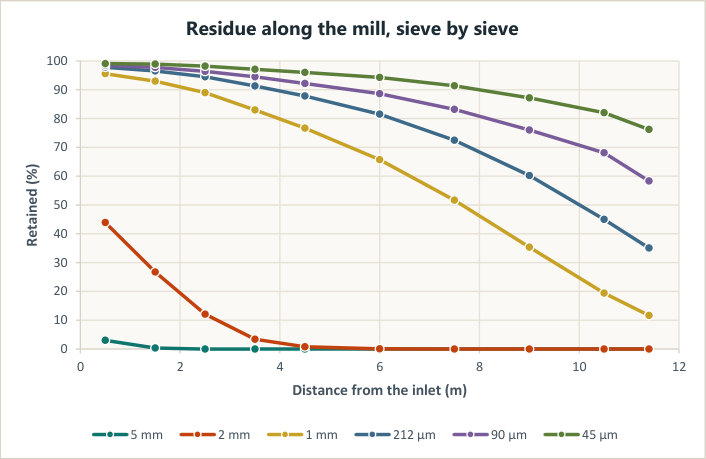
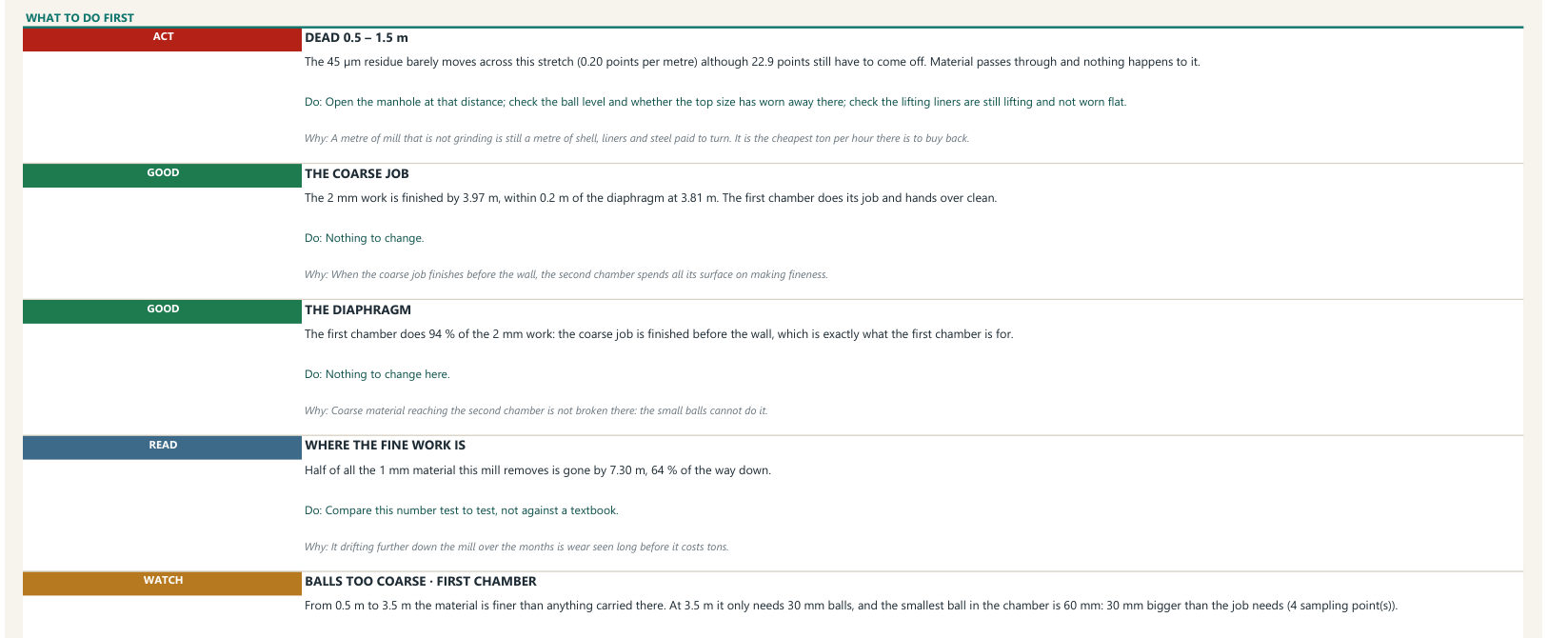
Worked on a demonstration plant.
Worked out for you
9 results from the figures you already measure.
What is inside the file
What you need
- 1Mill diameter, speed and chamber lengths
- 2Up to 10 scoops along the mill after a crash stop
- 3Each scoop on the same 6 sieves, cumulative residue
- 4The smallest and largest ball of each chamber; the ball level where it can be measured
Questions
Before you buy
Can I see it before I buy?
Yes. The sample report shows the whole first sheet of the file, worked on a demonstration plant: every result, the charts and what to do first.
Does it need the internet or macros?
No. It works on Excel 2013 or later, on Windows or Mac, with no macros and no connection. Nothing to install.
Can I use it for several mills?
Yes. Save one copy per mill and per test. The file is yours to use for as long as you like.
What is the What-if column?
Type a new figure beside today's and see every result change, before anything is changed in the plant.
Who may use my copy?
One engineer or one plant. Your name is written on every sheet.
How do I pay?
Press Buy. We reply on WhatsApp and by email with the bank details. When the payment arrives, your copy is ready to download from this page.
Where along your mill does the grinding stop?
Have the answer with your next figures.
More in the Cement Mill package
The other files of this package
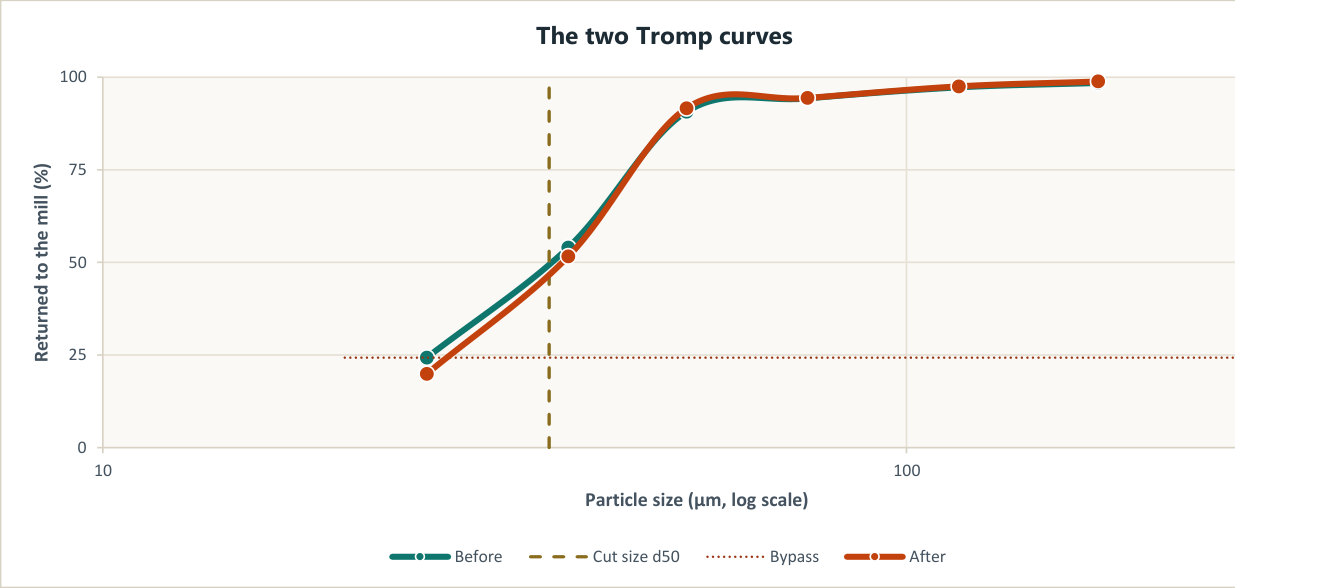
Is your separator sending finished cement back to the mill?
The mill runs hard, the power climbs, and the tons will not come. Often the reason sits on top of the mill: a separator sending finished cement back to be ground again.
What it savesStops the mill grinding cement that was already fine.
- Know in minutes if the separator is the reason the mill is slow or uses too much power
- Know what to fix first: guide vanes, rotor seal, air or feed spread, with the reason
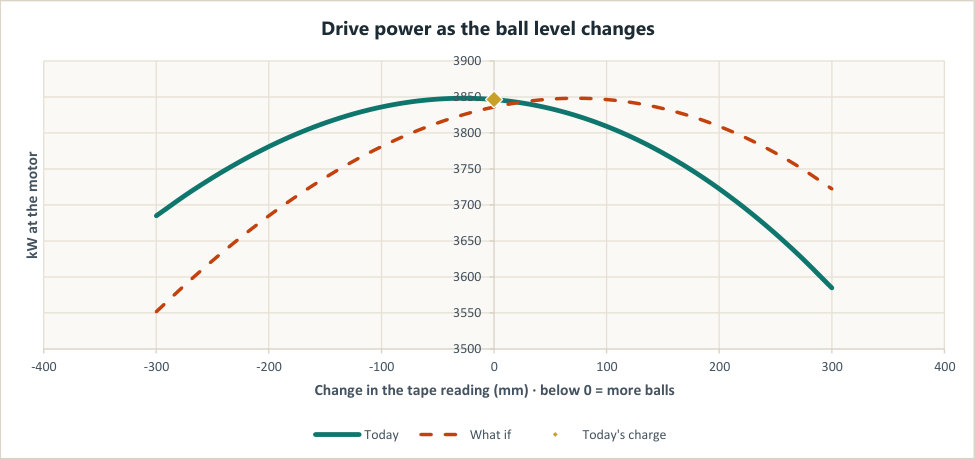
Is your mill drive pulling what the ball charge needs?
The drive pulls more power than last year for the same cement. Is the charge heavier than the records say, are the liners worn, or is the mill empty of work?
What it savesFinds the kW the drive takes for no grinding.
- The power the charge should take, chamber by chamber, at the motor
- The panel reading checked against it, with the reason when they differ
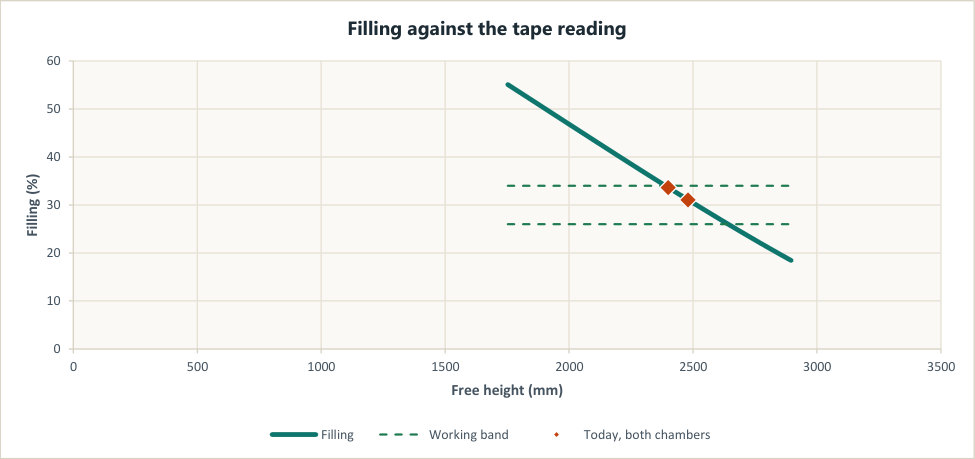
How many tons of balls should go in at the next stop?
After the top-up the mill draws more power and grinds no more. Too much steel cushions the charge; too little wears the liners. Both cost output.
What it savesEnds the guesswork on top-ups: the exact tons, and the tape reading that proves they went in.
- The filling of each chamber from one tape reading
- The tons to add or take out to reach the target
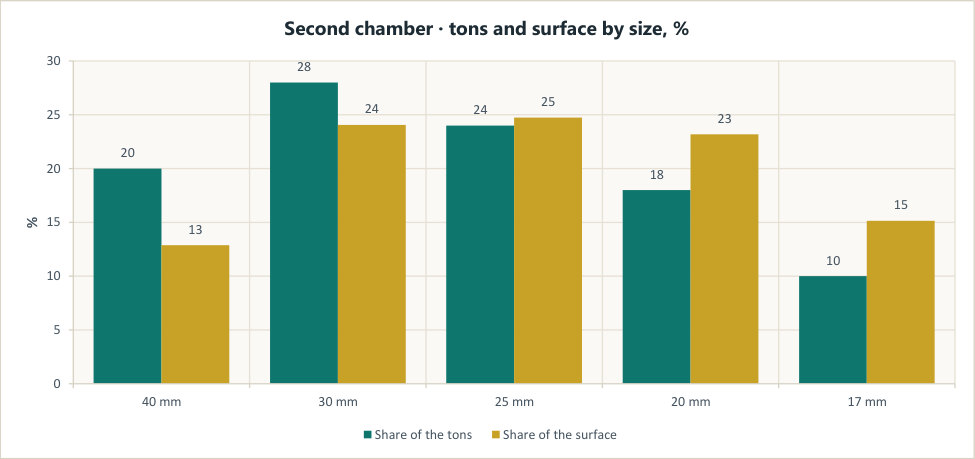
Is your ball charge still the one the mill needs?
The Blaine drifts down month after month and the same power buys less fineness. The charge sheet says nothing is wrong, but the steel inside has changed.
What it savesKeeps the steel grinding instead of just adding weight.
- The average ball and the grinding surface of each chamber, graded
- The filling from the recorded tons, and the tape reading it implies
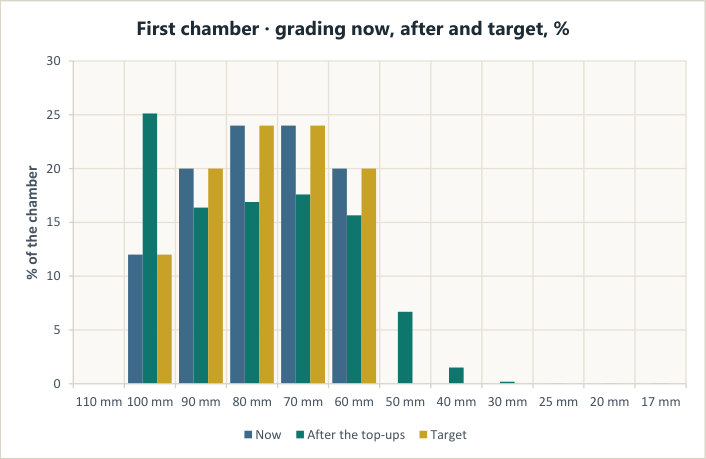
Where are your top-ups taking the ball charge?
The first chamber slowly fills with small balls nobody ordered. Each top-up adds the right tons and, quietly, the wrong grading.
What it savesStops paying for steel that ends up as small balls doing no work.
- Each chamber worked through the coming top-ups, size by size
- The sizes drifting off target, and the new sizes appearing
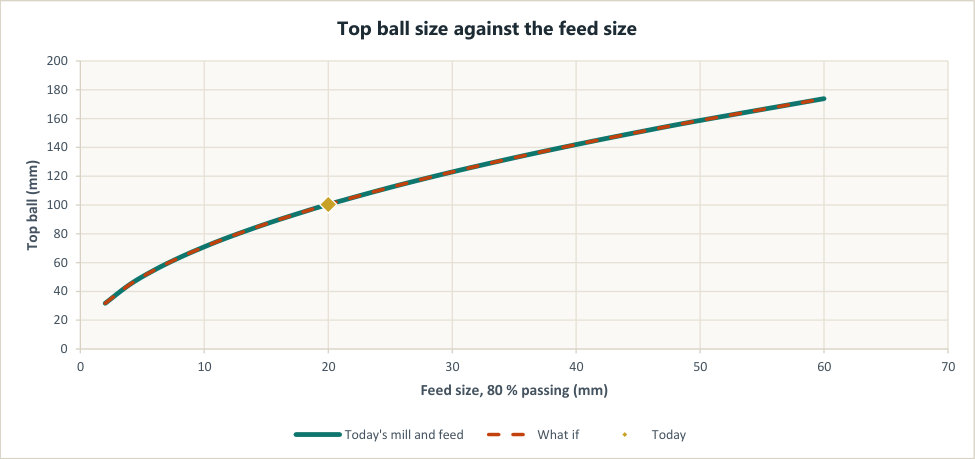
Is your top ball big enough to break the feed?
A coarser feed arrives and the first chamber stops breaking it. Lumps circulate, the return climbs and the output falls.
What it savesAvoids a first chamber full of balls too small to break the feed, or bigger than it needs.
- The top ball from the feed size, the work index and the mill speed
- Rounded to a size that can be bought