Specialized Tools · Kiln · No. 04
How much more chlorine will your kiln take before it blocks?
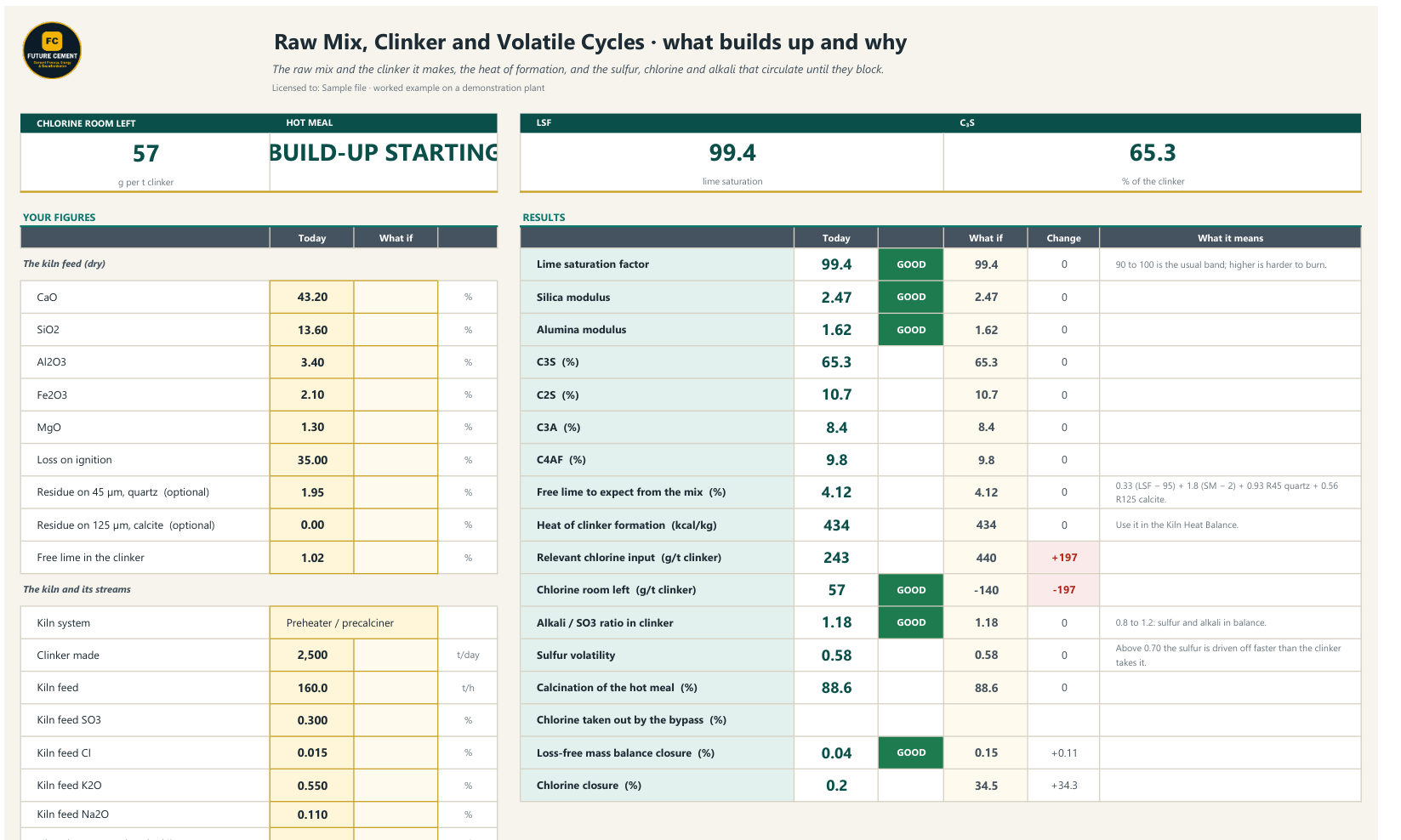
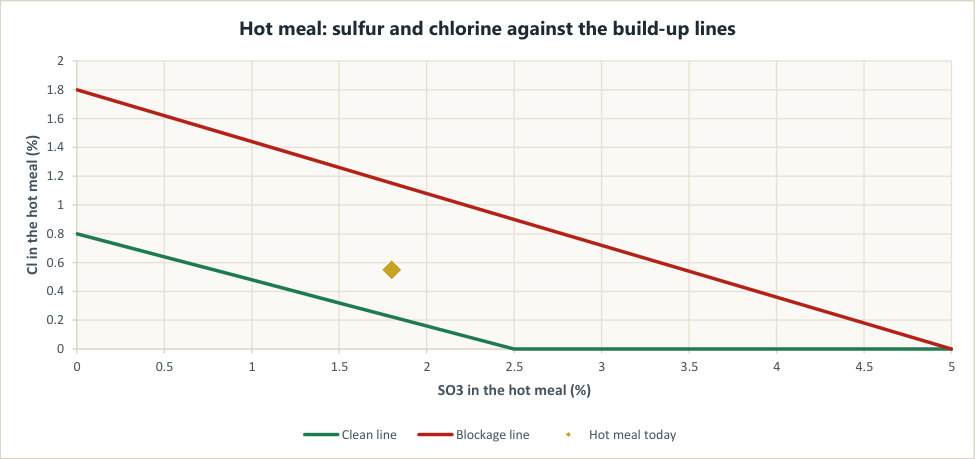
The lowest cyclone blocks again and the kiln stops for cleaning. Chlorine and sulfur circulate unseen between the kiln and the preheater until they condense, and every ton of new alternative fuel adds to them. Meanwhile the raw mix decides how hard the clinker is to burn.
What it savesTells how much alternative fuel the chemistry will take, before the cyclones find out.
- Excel 2013 or later, Windows and Mac
- No macros, no internet
- Updates for life
- Updates for life
- Your name on every sheet
How this file helps
Find out if it is happening to you, how much it costs, and what to correct.
What it gives you
The chemistry that decides the fuel.
See it working
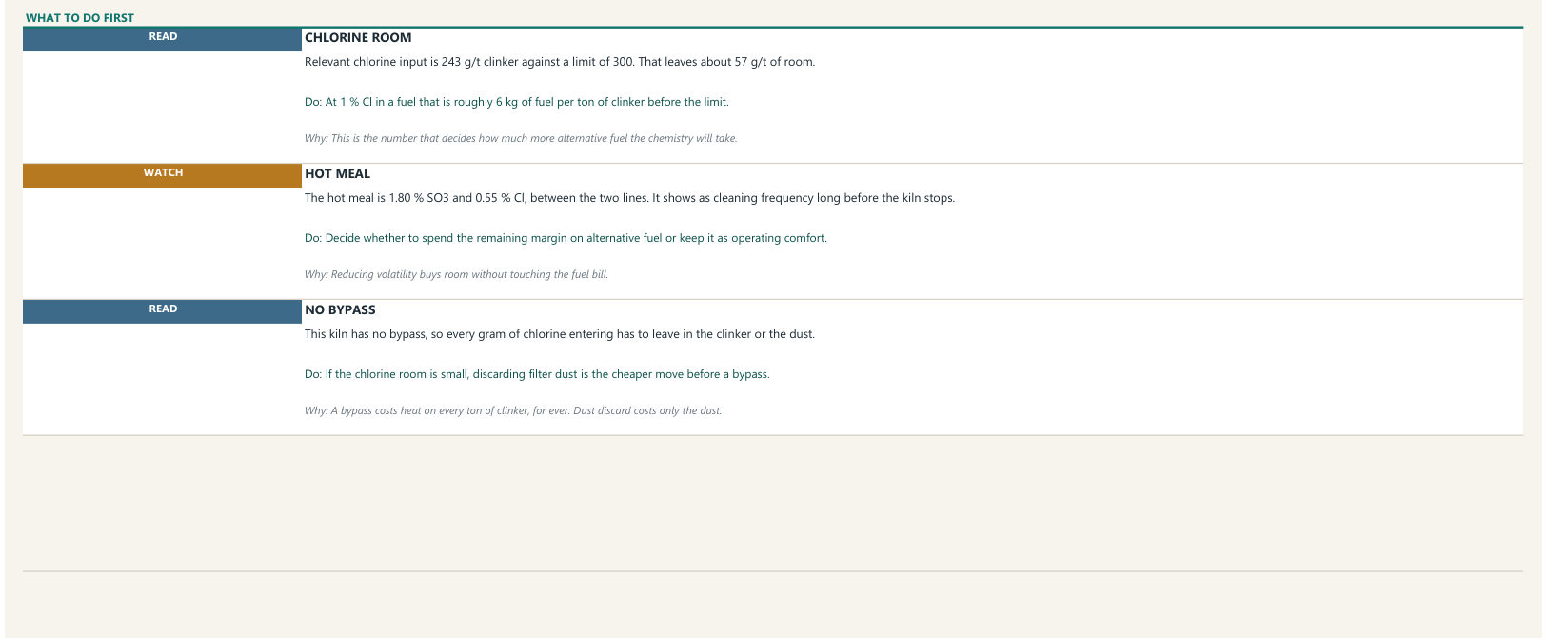
Worked on a demonstration plant.
Worked out for you
6 results from the figures you already measure.
What is inside the file
What you need
- 1The kiln feed analysis and LOI
- 2The streams: feed, dust, fuels, clinker, bypass
- 3Their SO3, Cl, K2O and Na2O
- 4The hot meal SO3, Cl and LOI
Questions
Before you buy
Can I see it before I buy?
Yes. The sample report shows the whole first sheet of the file, worked on a demonstration plant: every result, the charts and what to do first.
Does it need the internet or macros?
No. It works on Excel 2013 or later, on Windows or Mac, with no macros and no connection. Nothing to install.
Can I use it for several kilns?
Yes. Save one copy per kiln and per test. The file is yours to use for as long as you like.
What is the What-if column?
Type a new figure beside today's and see every result change, before anything is changed in the plant.
Who may use my copy?
One engineer or one plant. Your name is written on every sheet.
How do I pay?
Press Buy. We reply on WhatsApp and by email with the bank details. When the payment arrives, your copy is ready to download from this page.
How much more chlorine will your kiln take before it blocks?
Have the answer with your next figures.
More in the Kiln package
The other files of this package
Where does the heat of your kiln go?
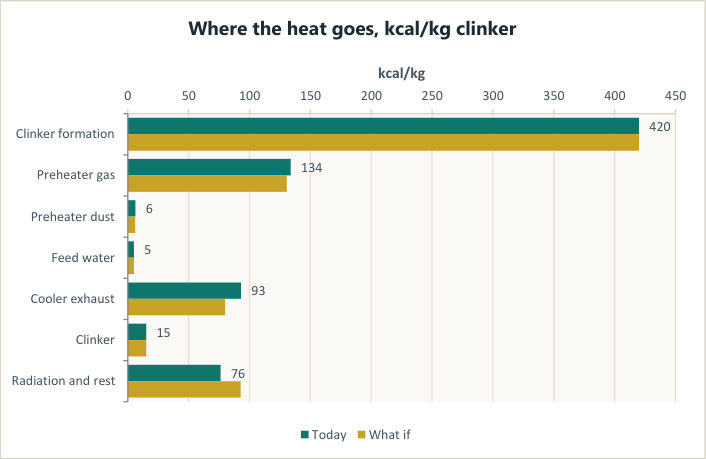
The heat crept up 20 kcal/kg this month and nobody can say where it went. On a 5,000 t kiln that is about 17 t of coal a day, burnt for nothing.
What it savesFinds the kilocalories above target, and puts a daily cost on them.
- The heat of every fuel, main burner and calciner, per kg of clinker
- The full balance in and out: preheater gas, cooler exhaust, clinker, radiation
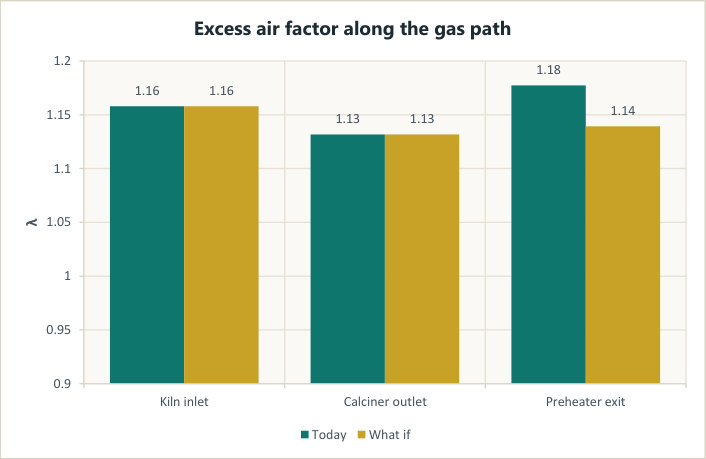
Is your ID fan moving kiln gas, or leaked air?
The ID fan is at its limit and the kiln cannot take more feed. Very often the fan is pulling air that leaked in through doors, flaps and joints, not kiln gas.
What it savesTurns the air leaking into the tower back into capacity for feed.
- Excess air at the kiln inlet, the calciner outlet and the preheater exit
- The false air between them, and what one point of O2 costs a day
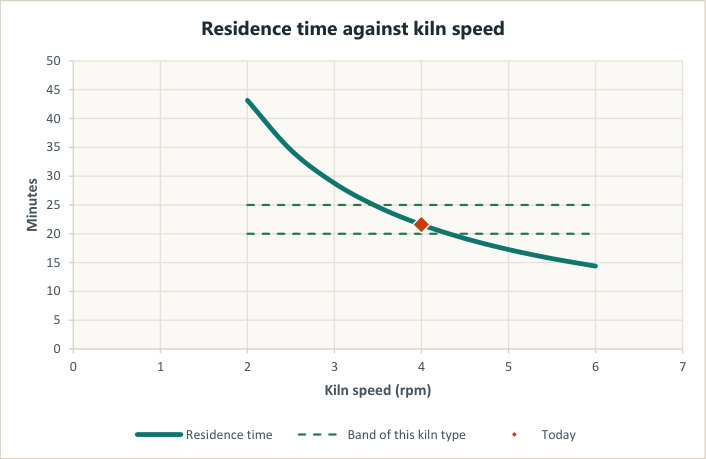
Is your kiln working in the band of its type?
Free lime jumps, the coating falls and the burning zone shell runs hot. The flame, the kiln speed and the load decide it, and they are rarely checked together.
What it savesKeeps the burning zone and the flame where the clinker is made, not the shell.
- Residence time, filling and loads against kilns of the same type
- The flame of the main burner: primary air, tip velocity, momentum